

A counsellor’s guide to clinical supervision

What professional supervision involves
Supervision is one of the few places you get to be the one talking.
Here is what professional supervision for counsellors involves, how often you need it, and what to look for in a supervisor.
What clinical supervision is for
You bring the cases that stay with you after the session ends, and you talk them through with someone who understands the work. You review your skills, your assessments and the approaches you are using, and you build on them. Supervision helps you stay inside your scope of practice and your ethical obligations, which protects both you and your clients.
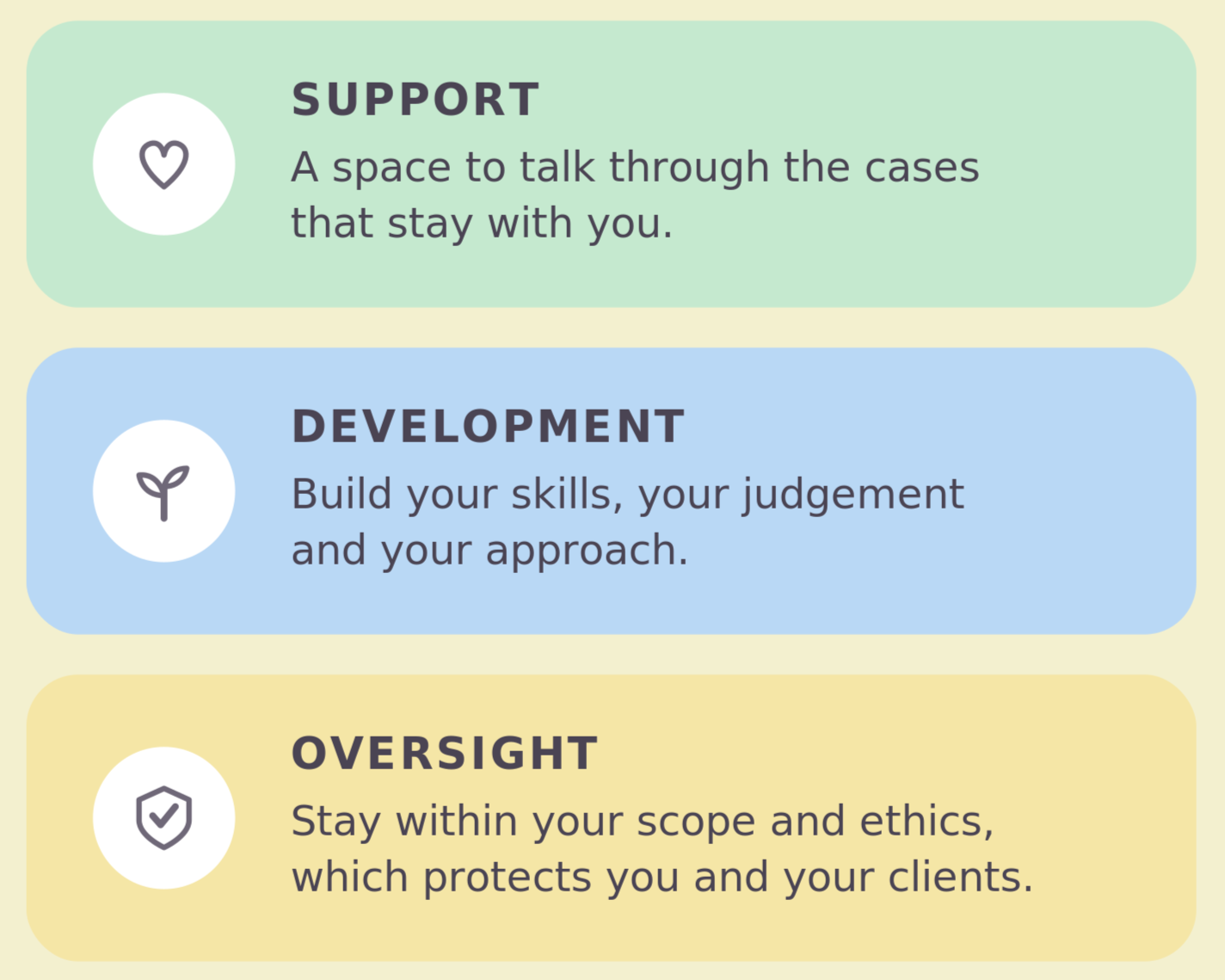
Supervision supports you through demanding work, it develops your skills and judgement, and it safeguards you and your clients.
Research on supervision links regular, good-quality supervision with lower burnout and stronger reflective practice. Counsellors who feel supported in supervision tend to report clearer professional judgement and more confidence in their work.
What happens in a session
A supervision session usually runs for an hour. You set the agenda. Most counsellors bring one or two current clients, a decision they are unsure about, or a pattern they keep noticing in their work.
A session often moves through a few stages. You describe the case or the question.
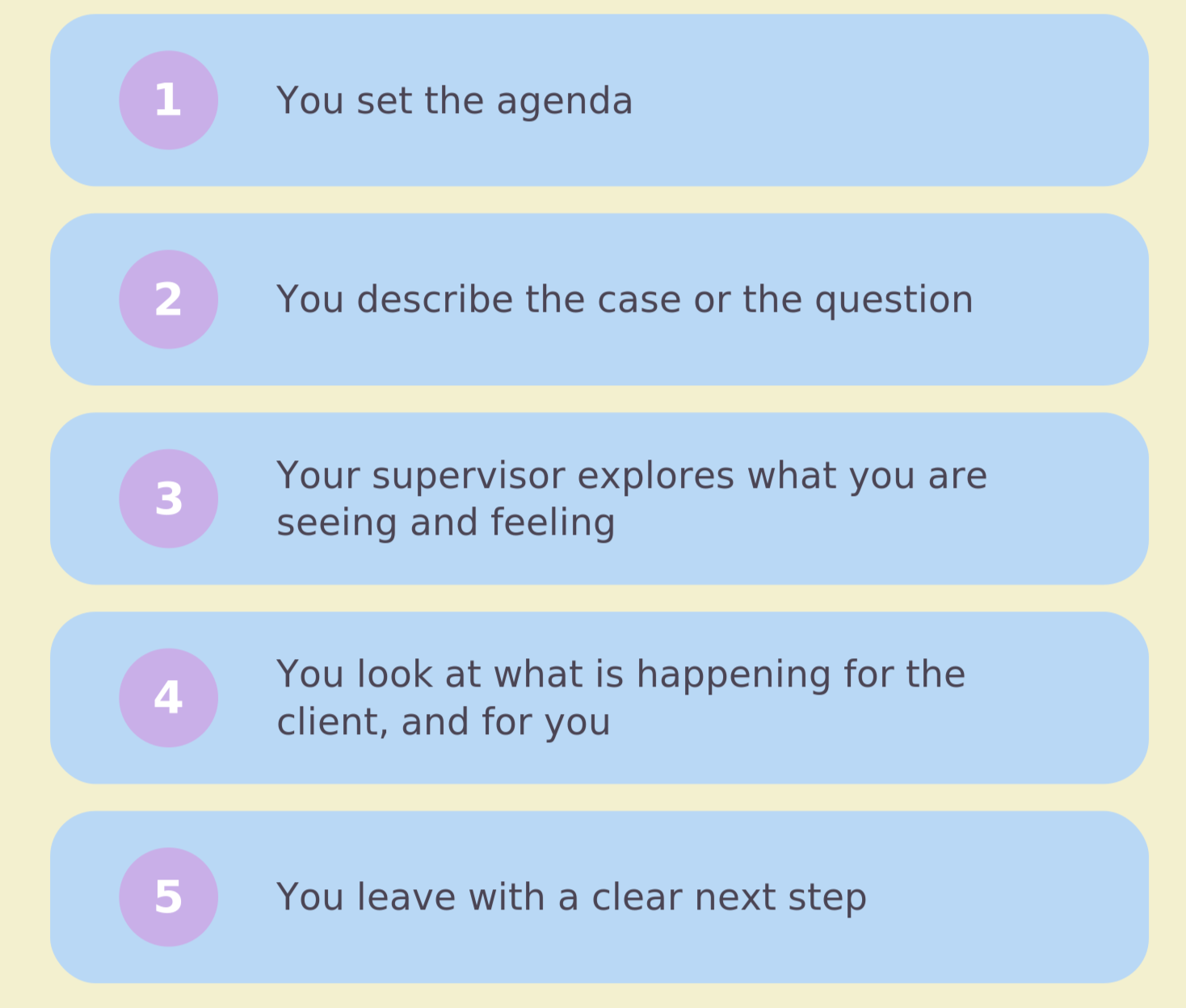
Your supervisor asks about what you are seeing and feeling. Together you look at what is happening for the client, and what is happening for you in the room. You leave with a clearer next step, and often something to reflect on before the following session.
Supervision is a working relationship built on trust. You can be honest about the parts of the work you find hard. Your supervisor is not assessing your performance, and supervision is not therapy for you as the counsellor.
Supervision, burnout and the weight of the work
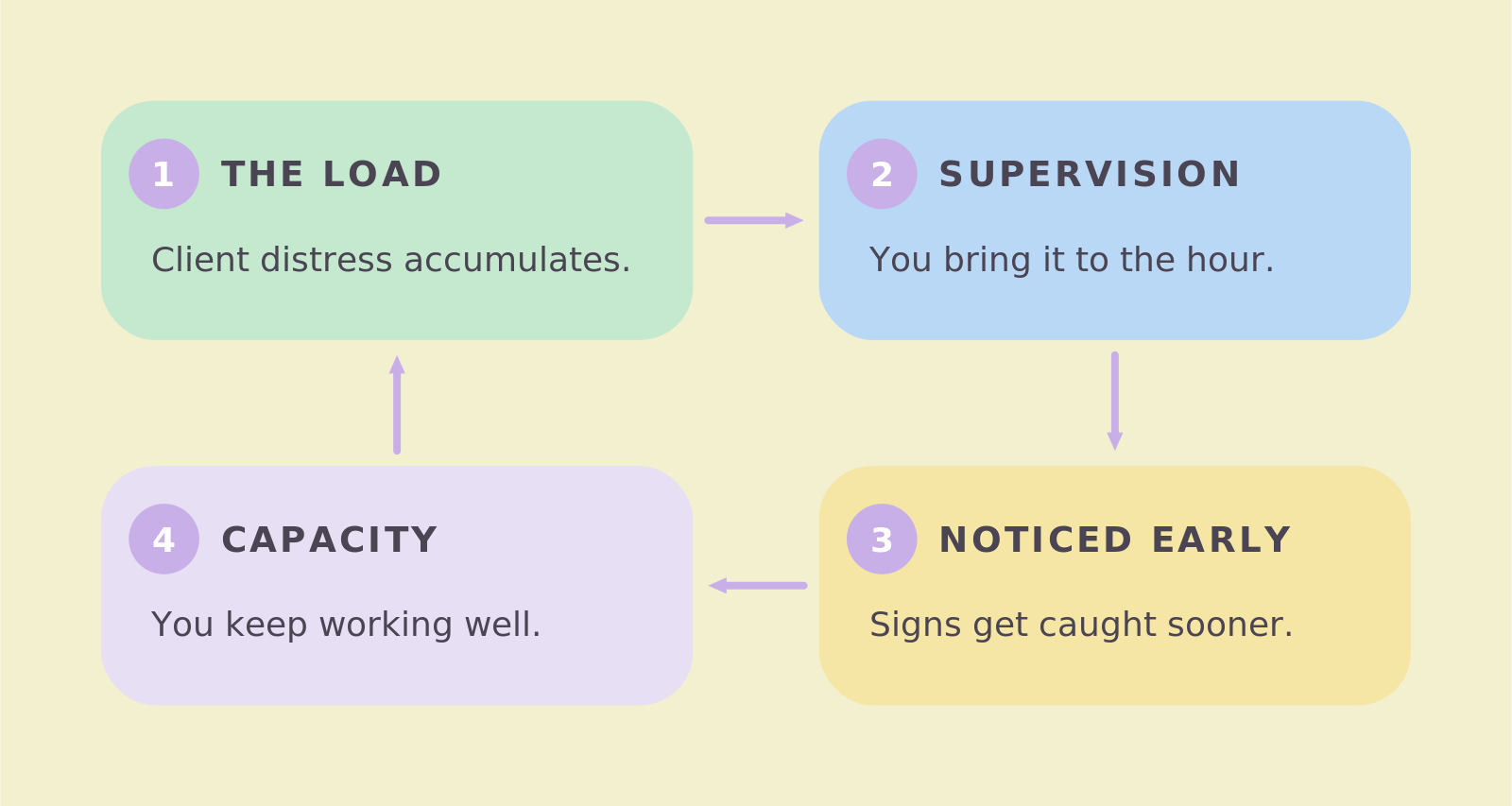
Counselling asks you to hold other people's distress, and that accumulates. Burnout and vicarious trauma are occupational risks in this profession rather than personal failings.
Supervision is one of the protective factors. It gives you somewhere to put the material that follows you home, and someone who notices when your caseload has tipped past what is sustainable. A supervisor often sees the signs before the counsellor does.
The benefits of clinical supervision reach your clients as well. A counsellor who is depleted works differently from one who is supported, and supervision is where that gets caught early.
Individual, group and peer supervision
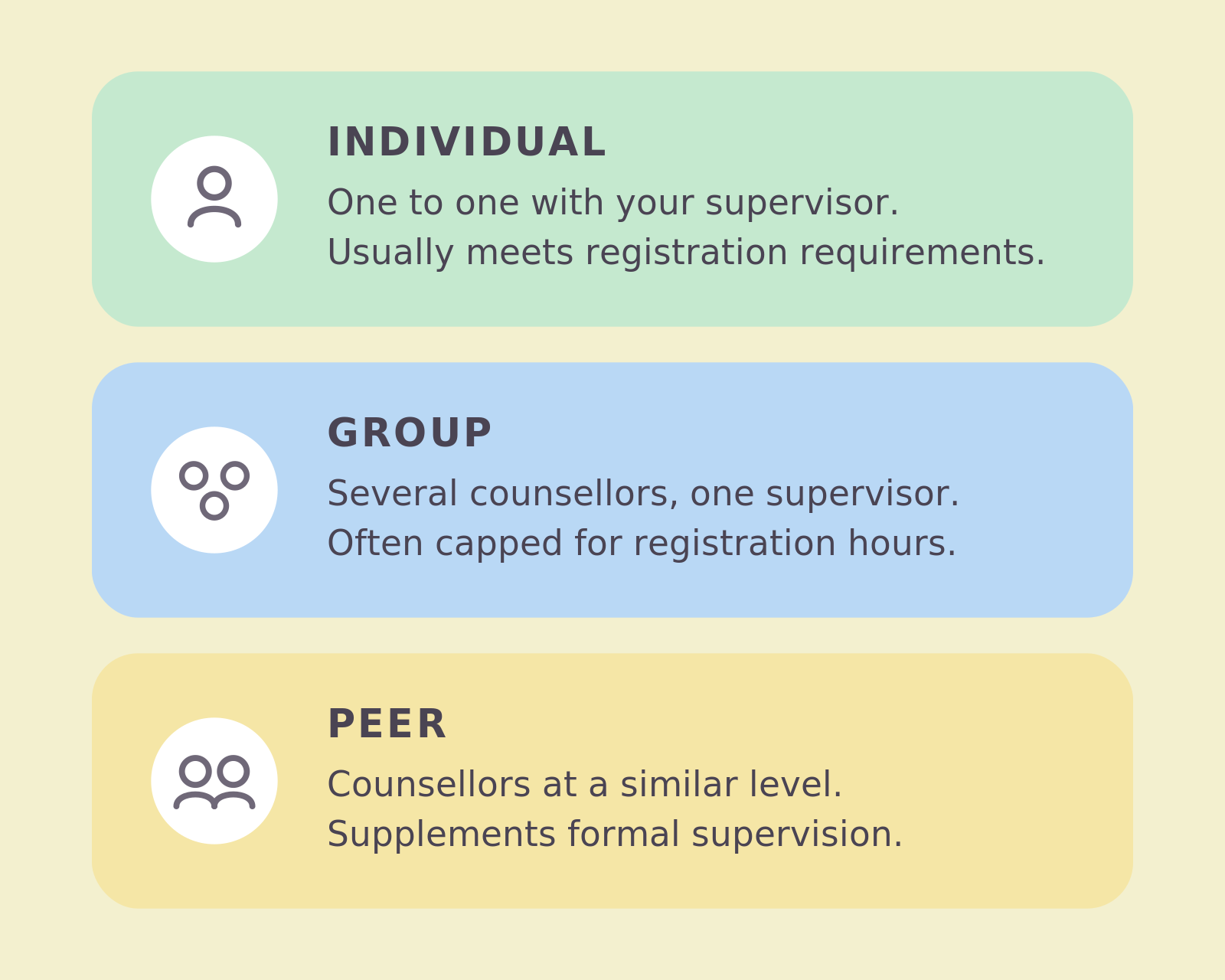
Supervision comes in a few formats, and most counsellors use more than one.
Individual supervision is a one to one hour with your supervisor. You set the agenda, the whole session belongs to your caseload, and you can stay with one case for as long as it needs. This is the format that usually satisfies registration requirements, and for most counsellors it is the base the other formats sit on. Supervision with Jas is one to one.
Group supervision brings several counsellors together with one supervisor. You get less airtime for your own cases, and in exchange you hear how other practitioners think about theirs. Associations usually cap how much group supervision counts toward your hours, so check before you rely on it.
Peer supervision is a structured conversation between counsellors at a similar level, with no supervisor in the room. It carries no oversight function, so it supplements your formal supervision rather than replacing it.
Models of clinical supervision
Supervisors work from frameworks, and it helps to know which one yours uses.
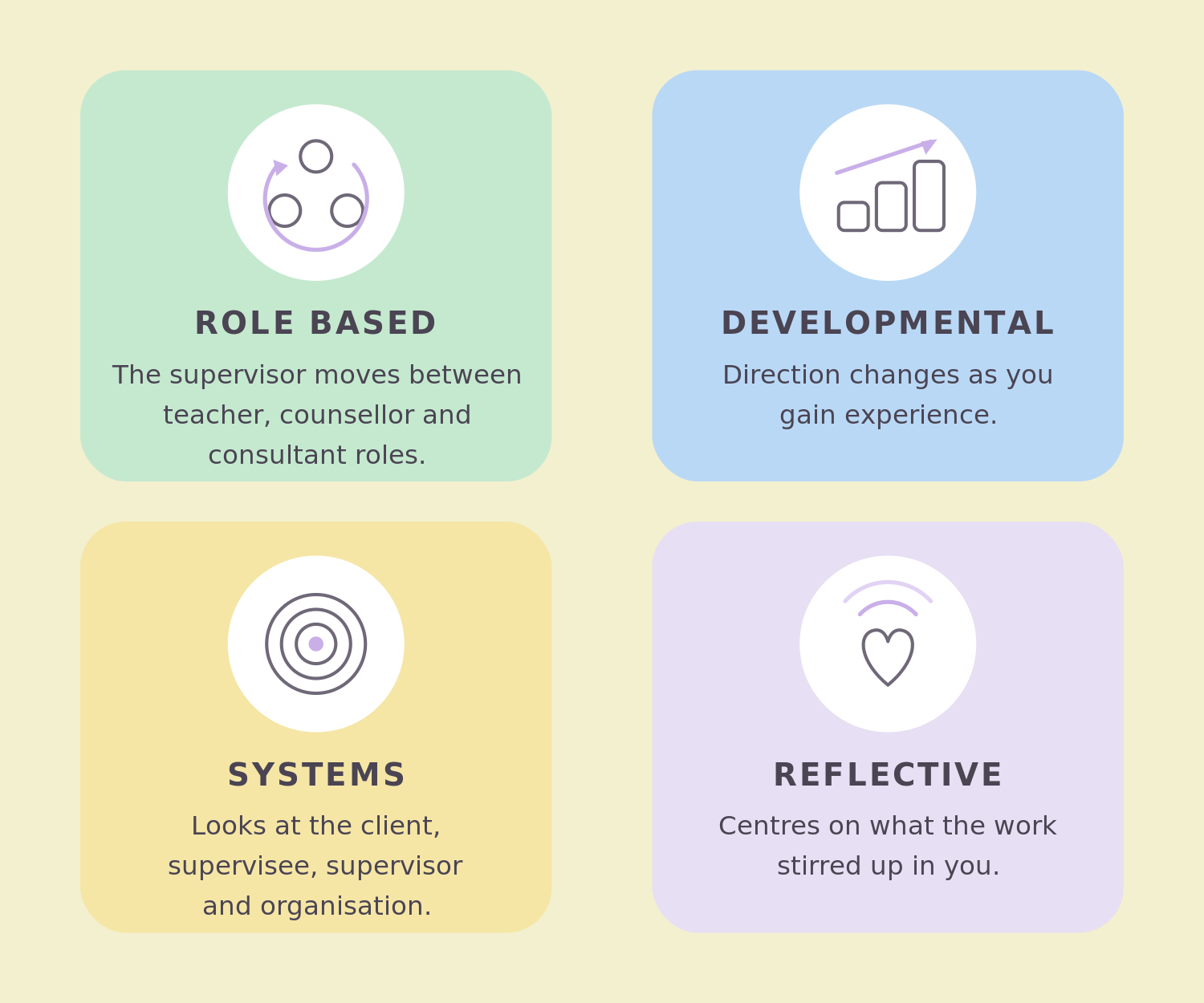
Some models focus on the roles a supervisor moves between across a session, such as teacher, counsellor and consultant. Some focus on developmental stage, and adjust how much direction you get depending on how experienced you are. Others focus on the systems around the work, including the client, the supervisee, the supervisor and the organisation.
Reflective supervision is a related approach that centres on the emotional content of the work. It gives weight to what a case stirred up in you, on the basis that your own responses carry information about the client.
You do not need to know the theory to benefit from supervision. It is worth asking a prospective supervisor how they work, because the answer tells you what your sessions will feel like.
External supervision alongside workplace supervision
Many counsellors have line management or team supervision inside their workplace. That internal supervision often blends case discussion with operational matters like caseloads, rosters and organisational policy.
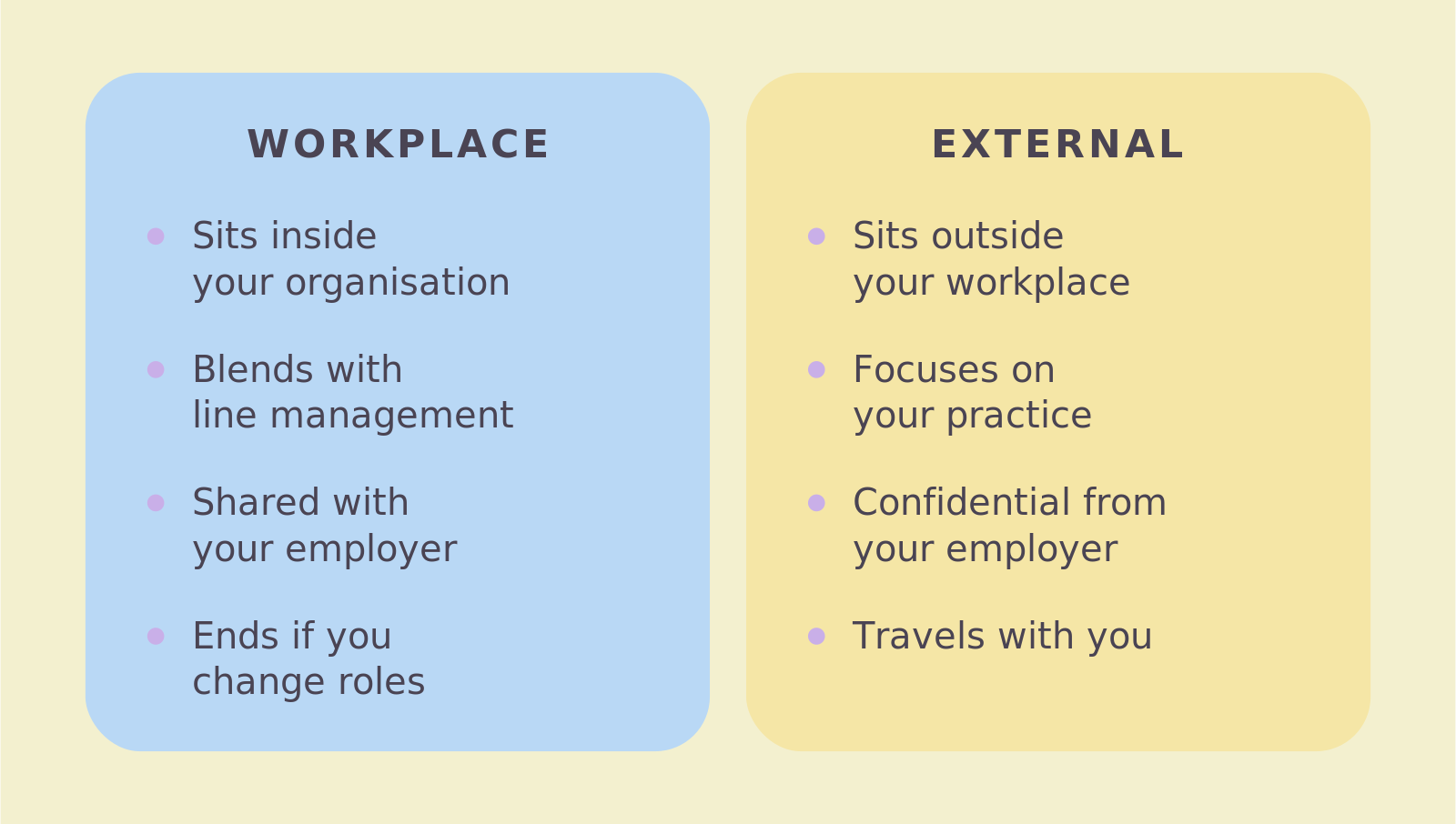
External supervision sits outside that structure. Since your external supervisor is not your employer, you might be more comfortable to raise concerns or bring up topics that you might want to hold back on in a team setting. You can talk about tension with a manager, doubts about an organisational decision, or a client your workplace is close to. External supervision also travels with you if you change roles, so your professional reflection stays consistent.
For counsellors in private practice, external supervision is usually the main form of supervision, since there is no internal structure to draw on.
The difference between line management & clinical supervision
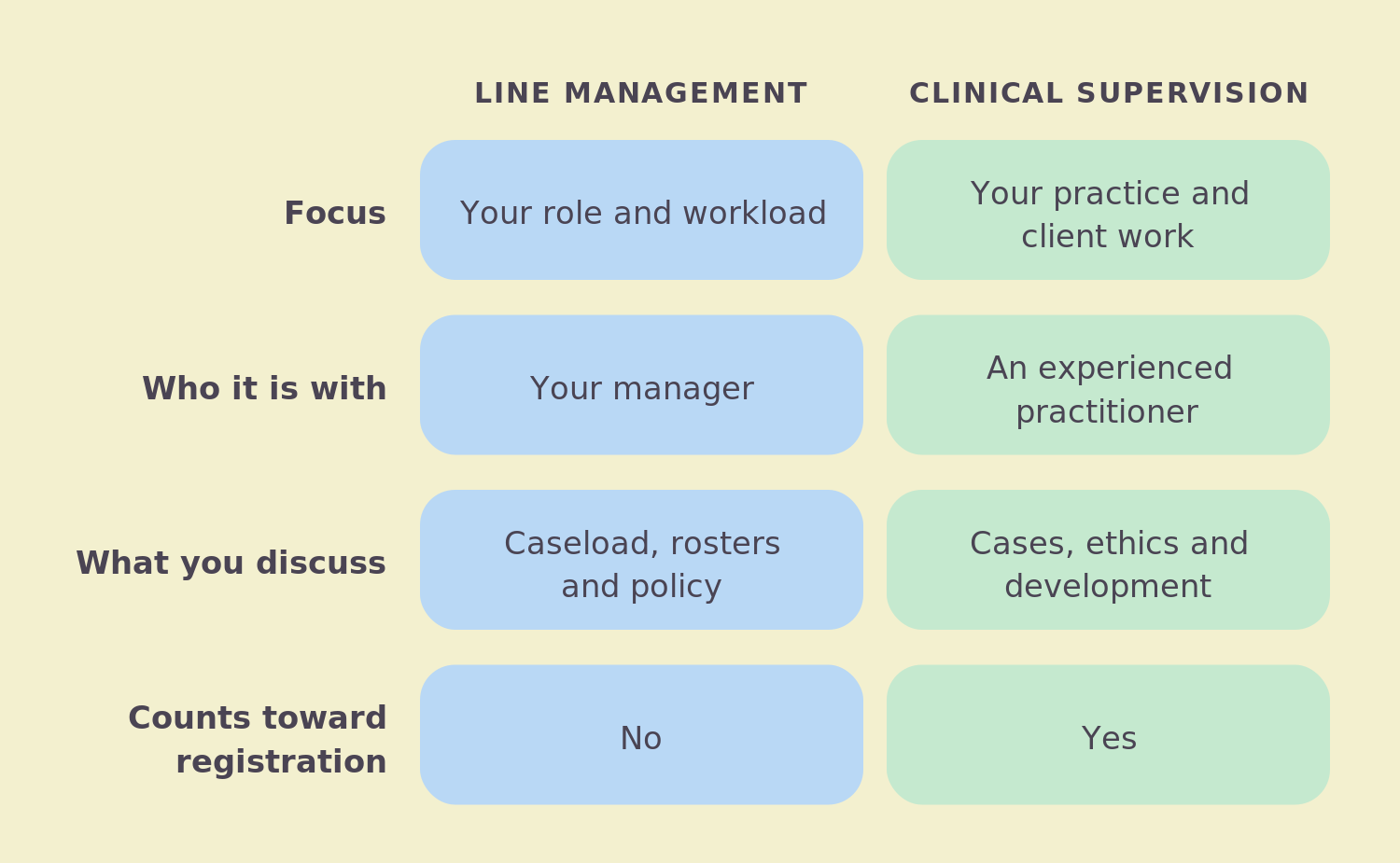
Line management covers your role, caseload and workplace matters. Clinical supervision focuses on your practice, your client work and your professional development. Many counsellors have both.
The two can sit with the same person in a small organisation. That arrangement asks a lot of both of you, because the person reviewing your practice is also the person approving your leave. Where it happens, it is worth adding external supervision so you have somewhere to take the things you would rather your manager did not hear first.
How often you need supervision
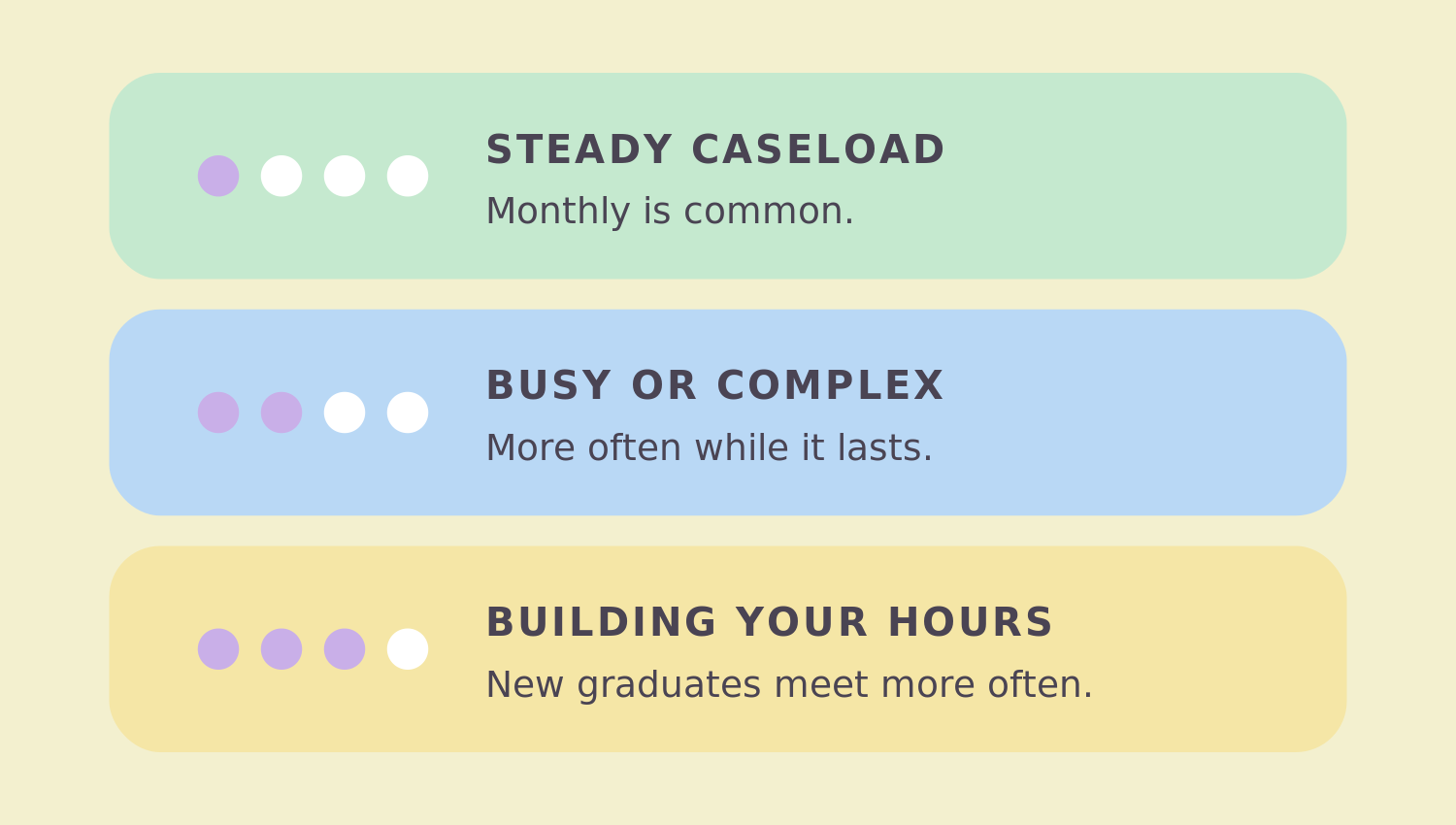
The Australian Counselling Association sets minimum supervision hours based on your level of registration and your client contact hours. Many counsellors meet monthly, with more frequent sessions during busy periods or when carrying complex cases. New graduates and counsellors building their hours often meet more often.
Registration requirements change, so check the current ACA supervision guidelines for the hours that apply at your level. A supervisor can help you plan a schedule that meets them and keep the records you need.
How to choose a supervisor
Look for someone registered and experienced, whose approach suits how you work, and with whom you feel safe being honest. Fit matters as much as credentials.
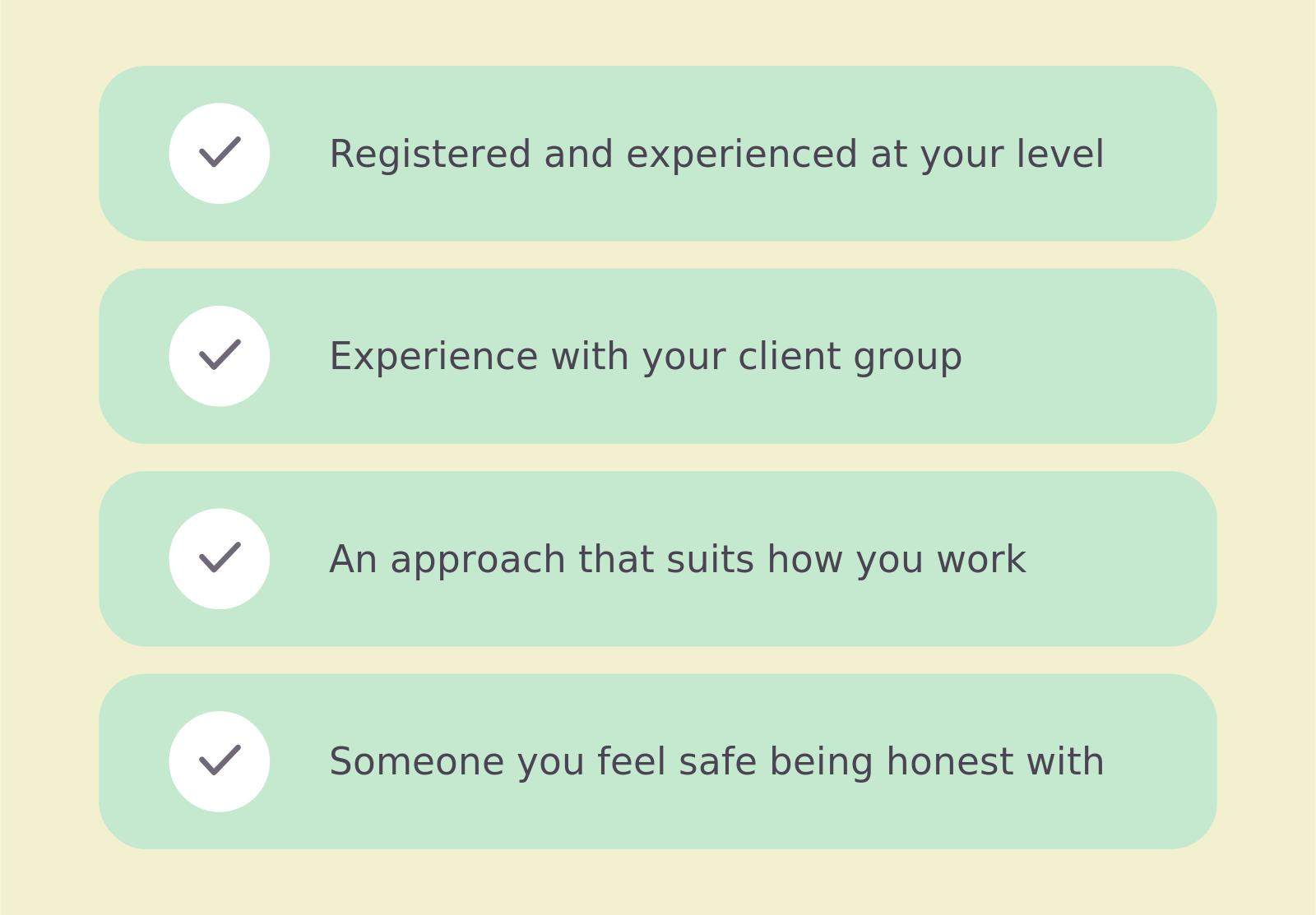
A few things worth asking before you commit. Does their supervision count toward your registration requirements. Do they have experience with the client group you work with. How do they structure a session. What happens if you disagree with them about a case.
Most supervisors will talk with you before you book. Use it. You are going to bring this person the work you find hardest, and you want to know how that will feel.
Common Questions about clinical supervision
-
Clinical supervision involves a supervisor who is more experienced than you and who carries an oversight role. Peer supervision is a structured conversation between counsellors at a similar level, with nobody in that role. Peer supervision supplements formal supervision rather than replacing it.
-
It depends on your registration level and your client contact hours. Many counsellors meet monthly, and new graduates or those building hours often meet more often. The current ACA guidelines set out the minimum that applies to you.
-
Usually in part. Most associations cap how much of your total can come from group supervision, with the rest coming from individual sessions. Check the current requirements for your level before you rely on it.
-
The first session usually covers how you both work, what you want from supervision, and the practical arrangements. You will often bring a current case as well, so the hour is useful from the start. It is also your chance to ask how your supervisor structures a session.
-
It happens, particularly in small organisations. It puts one person in two roles, since they are reviewing your practice and also managing your employment. Many counsellors in that position add external supervision so they have a space outside the reporting line.
-
Raise it first, because the difficulty is often workable and talking about it is useful in itself. If it does not shift, changing supervisors is a reasonable professional decision. The quality of the relationship shapes what you get from supervision, so a poor fit is worth acting on.
-
Requirements usually scale with client contact hours, so a quiet period may reduce what you need. Registration requirements continue regardless, so check what applies at your level rather than stopping altogether.
-
Frequency and session length, confidentiality and its limits, record keeping, cancellation terms, what happens if a concern about practice arises, and when you review the arrangement.
-
Mentoring is usually career focused and informal, and a mentor has no responsibility for your practice. Clinical supervision covers your client work and carries an oversight role, which is why it counts toward registration and mentoring does not.
Supervision with Therapy by Jas

Jas is a registered counsellor and ACA Level 4 clinical supervisor with six years of practice. Supervision is one to one, online via Google Meet, Australia wide.
You can read more about how she supervises, who she supervises and what it costs on the clinical supervision page, or meet Jas first.